📐Engineering Playbook
> config.yaml> make build> make deploy
Engineering Playbook
Production-grade engineering standards and patterns for regulated industries
👀 8,475LinkedIn impressions
❤️ 104reactions
🔖 141saves
⭐ 43GitHub stars
🍴 11forks
Real projects built to solve real problems — across engineering, security and data.
Production-grade engineering standards and patterns for regulated industries
Engineering teams in regulated industries often operate without shared standards, leading to inconsistent quality, silent security gaps, and slow onboarding. Every new project reinvents the same decisions around architecture, testing, CI/CD, and compliance — burning time and introducing risk.
To give engineering teams a running start. Whether you are joining a new team or building from scratch, a shared playbook eliminates repeated debates, accelerates onboarding, and embeds security and quality as defaults — not afterthoughts.
A comprehensive, opinionated engineering playbook covering architecture decision records, security patterns, DevOps standards, API design, testing strategies, incident playbooks, and team practices for building high-integrity systems.
Structured as living documentation with real-world examples and templates. Each section covers the "why" behind the pattern, implementation guidance, and anti-patterns to avoid. Designed to be forked and adapted to team context.
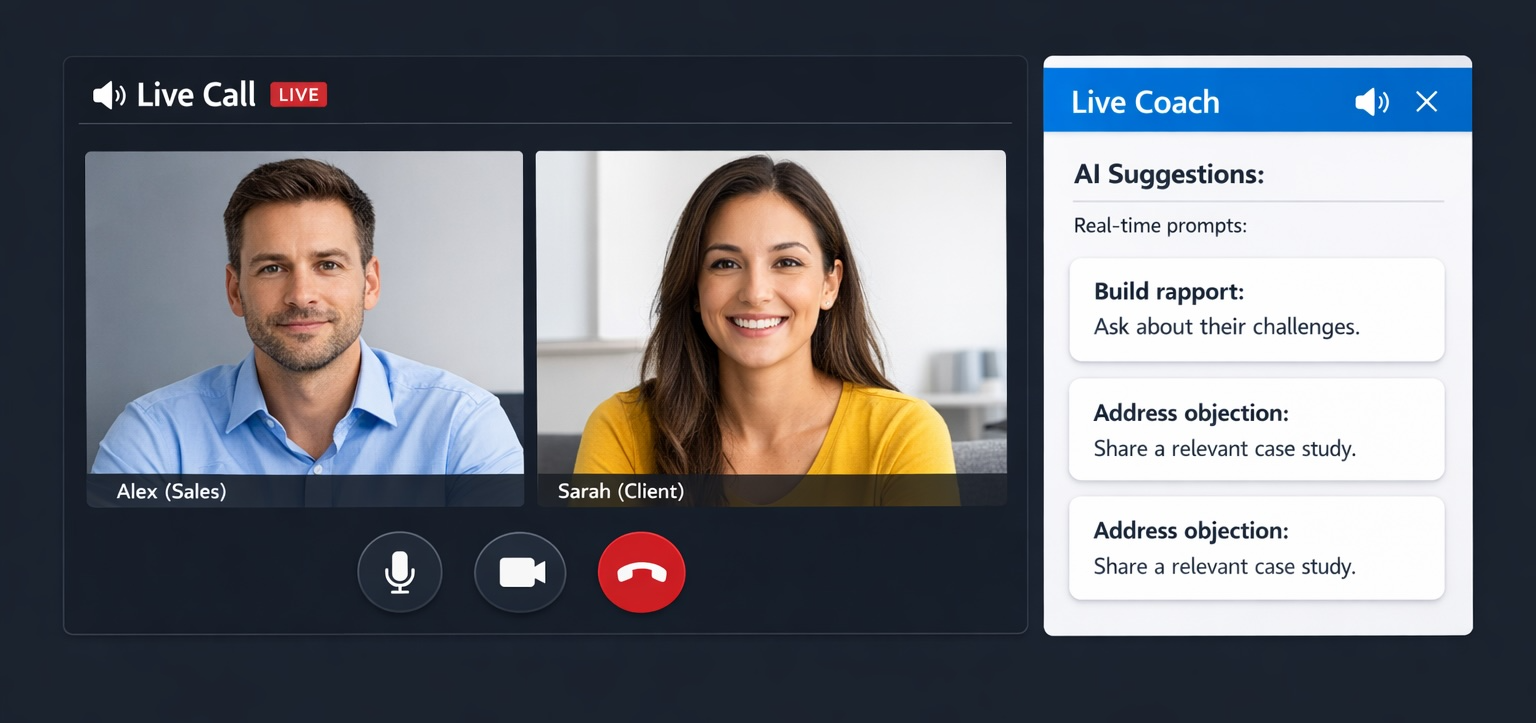
Better voice. Every high-stakes conversation, elevated.
The most important moments in any conversation — a difficult objection, a shift in tone, a missed signal — pass in seconds. Coaching, training, and retrospectives happen after the fact, when it is already too late to change the outcome.
Performance in live conversations is the last frontier that has not been meaningfully improved by technology. The gap between a good conversation and a great one is often just one timely insight.
A real-time AI companion for live conversations. It listens, understands context, and surfaces the right intelligence at the right moment — without disrupting the flow of the conversation.
Details coming soon.
Six interactive demos for data platform evaluation — live in your browser, no install required.
Selecting an enterprise data platform — Snowflake, Databricks, Microsoft Fabric, or AWS Native — requires hands-on evaluation, but most paths run through months-long PoCs, vendor-driven demos, or costly lab environments.
Engineering and data teams need to compare real architectural differentiators before committing to multi-year platform contracts — not through marketing claims, but through interactive, reproducible evaluation tools.
A browser-based evaluation suite with six tools: a platform decision advisor that ranks options across five platforms from 12 questions, a three-year TCO and sizing calculator, NL-to-SQL with visualisations, document intelligence, a pipeline observability dashboard, and semantic property search. No install required.
Hosted on Vercel. Built with the Wonoments design system. Each demo runs entirely in the browser against synthetic datasets.
Zero-config AI agent and shell task scheduler — no cron, no root, no credential plumbing
Scheduling AI agent tasks and shell scripts means wrestling with cron syntax and root access, or reaching for heavyweight orchestrators like Airflow and Dagster — none of which natively understand Claude Code, Codex, or OpenCode.
Developers running regular AI-assisted workflows need a daemon that handles credentials safely and runs in user context — without a server, a root install, or an afternoon of config.
A lightweight Rust daemon that schedules AI agent tasks and shell commands from simple .htb YAML files. Supports hot-reload, multi-step pipelines with conditional branching, and native macOS Keychain integration.
Single ~2–3 MB Rust binary. Jobs are .htb files with YAML frontmatter. Daemon communicates via Unix socket and runs via macOS LaunchAgent. Ships with 115+ unit and integration tests. Single-command install.
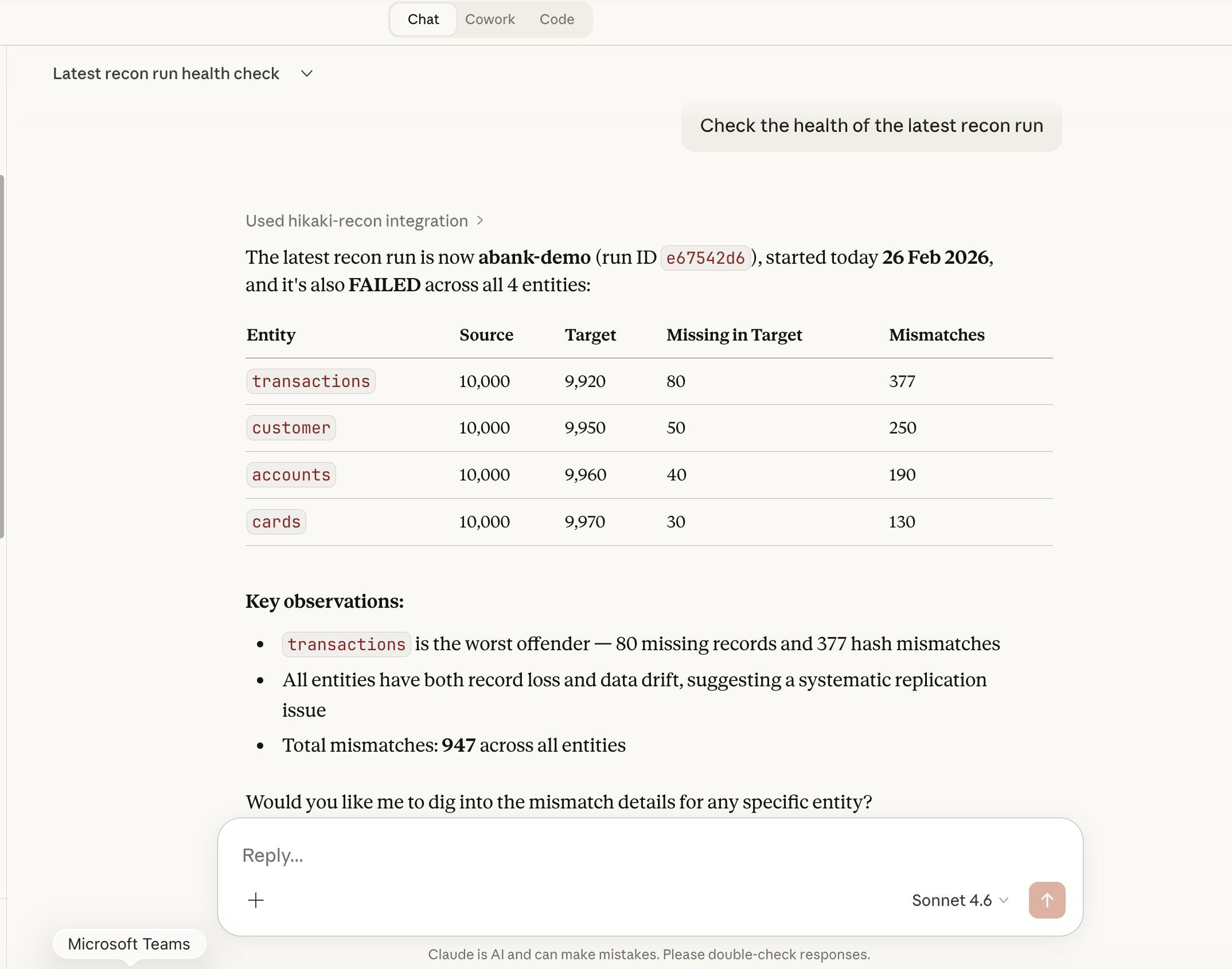
Configuration-driven data reconciliation with full auditability, native AI integration, and MCP support
Financial services, healthcare and retail organizations run complex nightly reconciliation pipelines that are brittle, opaque, and produce no meaningful audit trail. When mismatches occur — missing records, field-level data drift — teams spend hours tracing root causes across systems with no tooling to help.
To turn reconciliation from a black box into an observable, auditable process. Organizations need to know not just that data does not match, but where, why, and across how many batches — with full history retained for compliance.
A Python-based reconciliation engine driven by YAML configs. Compares source and target datasets in configurable batches, computes field-level hashes, classifies mismatches (missing vs hash drift), tracks every run in a SQLite store, and visualises results in a Streamlit dashboard. Ships with an MCP server and full AI integration — works natively with Claude, GPT, and Gemini so teams can query recon results, investigate mismatches, and drill into run history through natural language.
Built with Click CLI, Pydantic config validation, SQLAlchemy tracking store, and a Streamlit dashboard. Supports CSV and SQL sources out of the box. Deployable via Docker, Docker Compose, Kubernetes (kind), or Cloud Run. Ships with 183 tests and a healthcare demo dataset.
Execution momentum tracker for developers and AI coding agents
Work loses momentum not because it goes untracked, but because there is no system to surface what is stalling or what has gone cold. Standard task managers do not understand AI coding sessions, token costs, or warn when a thread has been neglected for 48 hours.
With Claude Code, Codex, and Gemini CLI generating sessions with real token costs and completion states, developers need a personal ledger that ties agent output to the thread it worked on — and flags when momentum drops.
A local execution tracker that logs AI agent sessions into SQLite, tracks development threads through lifecycle states (new/open/waiting/blocked/closed), and provides a real-time web dashboard with stall alerts, cost tracking, and weekly summaries.
TypeScript CLI backed by SQLite + Drizzle ORM. Dashboard at localhost:3141 via Next.js. Auto-detects Claude Code, Codex, OpenCode, and Gemini CLI sessions. Git post-commit hooks bump thread activity. Ships with Vitest unit and Playwright e2e tests.
Self-hosted overnight AI agent platform — inspired by Stripe Minions
Running AI agents for overnight coding, marketing research, and sales-scouting requires either expensive managed platforms or complex self-hosted setups with large resource footprints — neither built for developers or small teams on a budget.
To make overnight AI agent work accessible without the cloud bill. Small teams should be able to schedule multi-agent jobs against Claude Code, Codex, OpenCode, or CrewAI in isolated containers — without paying SaaS margins.
A self-hosted platform for scheduling coding, marketing, and sales-scouting AI agent jobs overnight. Each job runs inside an isolated container workspace. Supports Claude Code, OpenCode, Codex, and CrewAI. Built in Rust for a minimal footprint.
Built in Rust with a small binary footprint — runs on a single machine or small VPS. Jobs are scheduled via config file; results surfaced in a lightweight dashboard. Isolated container workspaces keep agent runs clean and reproducible.
Practical zero trust implementations beyond the buzzword
Zero Trust is ubiquitously recommended but rarely implemented correctly. Teams get lost between marketing claims, vendor lock-in, and the actual engineering needed to implement least-privilege access, network microsegmentation, continuous verification, and policy-as-code across cloud environments.
To bridge the gap between the principle and the practice. The book "Zero Trust Security Engineering" explores this in depth — this repo makes the reference implementations hands-on and immediately usable by engineering teams.
Reference architectures, policy-as-code templates, IAM patterns, network segmentation examples, and step-by-step implementation guides for zero trust in cloud-native environments across AWS, Azure, and GCP.
Built around real implementation patterns used in regulated sectors (banking, health, insurance). Includes Terraform modules, OPA policies, and architecture diagrams. Companion to the published book by Mahesh Patil.
Natural language data access for non-technical users
Data access is gatekept by SQL knowledge, creating dependency on engineering for routine data questions. Business analysts, product managers, and domain experts wait days for queries that should take minutes — slowing decisions and wasting engineering capacity.
To democratise data access. Non-technical stakeholders should be able to query their own data without writing SQL or submitting tickets. The goal is faster decisions and less engineering bottleneck.
An LLM-powered tool that converts plain-English questions into validated SQL queries. Schema-aware, with query explanation and result preview — so users understand what they are getting, not just what they asked for.
Uses a large language model with schema context injection to generate SQL, followed by a validation and execution layer. Includes schema discovery, query explanation, and guardrails to prevent destructive operations.